
Barton County Criminal Court Records
A criminal court record begins when a charging document is filed in court. In Barton County, that record is maintained through the District Court and the Clerk of the District Court. The court file is different from an arrest report, jail custody entry, or sheriff incident report. Arrest and booking records start with law enforcement, while the criminal court record tracks the filed case, hearing history, charge status, disposition, and sentence.
Kansas district courts are trial courts of general jurisdiction. Barton County District Court is in the 20th Judicial District, which also includes Ellsworth, Rice, Russell, and Stafford counties. District court criminal records can include felony cases and qualifying misdemeanors. Municipal courts handle city ordinance violations, many local traffic citations, and city misdemeanors, but they do not handle felony prosecutions or district court criminal case files.
For a closer look at the arrest-to-charge pathway, use the Barton County arrest records and court charges page. For the wider civil, probate, domestic, traffic, and criminal case system, use the general Barton County court records page.
Search Barton County Criminal Cases
Use Kansas CaseSearch for public Barton County District Court criminal case information. Search by case number when available, or use defendant name, business name, citation, or another role-based criterion that appears in the search system. The result may show case status, docket entries, hearing settings, charges, dispositions, financial fields, and public document access, depending on the case and access limits.
If CaseSearch does not show enough detail, contact the Barton County Clerk of the District Court. The clerk can explain access to courthouse terminals, older files, certified copies, and document availability. Some criminal case details may be redacted or withheld when they involve juvenile material, sealed records, protected identifiers, ongoing restrictions, or expungement orders.
Search by the most stable identifier first. A case number avoids many name-match problems, especially when a defendant has a common name, middle initial, suffix, prior name, or spelling variation. If only a name is known, compare the case type, filing date, court, county, and docket events before treating the result as the correct Barton County criminal court record. A traffic or municipal citation can look similar at first glance, but it may belong to a city court or payment system instead of the district court criminal file.
- Open Kansas CaseSearch and select the best search field for the known information.
- Search by defendant name, case number, business name, or citation.
- Open the criminal case and read the docket entries in sequence.
- Check charges, pleas, hearing settings, disposition, sentence, fines, restitution, and costs where public.
- Contact the Clerk of the District Court for certified copies or documents not available online.
Barton County Criminal Case Flow
A Barton County criminal court record changes as the case moves through the court. The first public filing may be a complaint or information. Later entries may show first appearance, arraignment, bond, motions, continuances, plea negotiations, trial settings, disposition, sentencing, probation, restitution, court costs, or warrant actions. One case can contain several charges, and each count can have its own result.
The Barton County Attorney's Office is part of this flow because the county attorney prosecutes criminal, traffic, juvenile offender, child-in-need-of-care, and care and treatment cases according to the local research. The clerk's file then records what the court receives and orders. That split helps explain why a sheriff report, a prosecutor filing, and a court docket may each answer a different question about the same event.
Case flow: Charges Filed › Arraignment › Pretrial and Motions › Plea or Trial › Disposition › Sentencing
| Stage | What Happens |
|---|---|
| Charges Filed | The prosecutor files the complaint or information that opens the criminal case record. |
| Arraignment | The court addresses the charge and the defendant enters a plea. |
| Pretrial and Motions | Parties file requests, evidence issues may be raised, and hearings may be set. |
| Plea or Trial | The case resolves by plea, trial verdict, dismissal, or another court order. |
| Sentencing | The court enters punishment or conditions such as probation, jail, fines, restitution, or costs. |
Barton County Criminal Record Fields
A criminal court record is built from docket data and filed documents. It can show the defendant, the State of Kansas as prosecuting party, attorneys, judge assignment, charges, bond, warrants, hearings, motions, orders, plea, disposition, sentence, and financial terms. It may also show probation, restitution, balance, or payment status where public. A sheriff report may support the case, but it is not the same record as the court file.
| Field | What It Shows |
|---|---|
| Case Number | The Kansas district court number for the Barton County criminal case. |
| Defendant | The person charged in the filed court case. |
| Charges | Counts, statute references, severity, and charge status when public. |
| Bond or Warrant | Release conditions, bond amount, warrant issue, recall, or failure-to-appear entries when public. |
| Plea | The defendant's answer, such as guilty, not guilty, or no contest. |
| Disposition | The outcome of the charge or case, such as dismissed, guilty, acquitted, or amended. |
| Sentence | Jail, probation, fines, costs, restitution, or other terms imposed after conviction. |
Kansas Criminal Record Sources
The court case file is not the same as a statewide criminal history, offender registry, or prison status search. The Kansas Bureau of Investigation is a state criminal justice source, and its registered offender system is separate from ordinary Barton County court records. The KBI Registered Offender search concerns people required to register for certain sex, violent, and drug offenses. KBI notes that the registry may be incomplete or inaccurate and that fingerprint verification is the only positive way to link a person to a record.
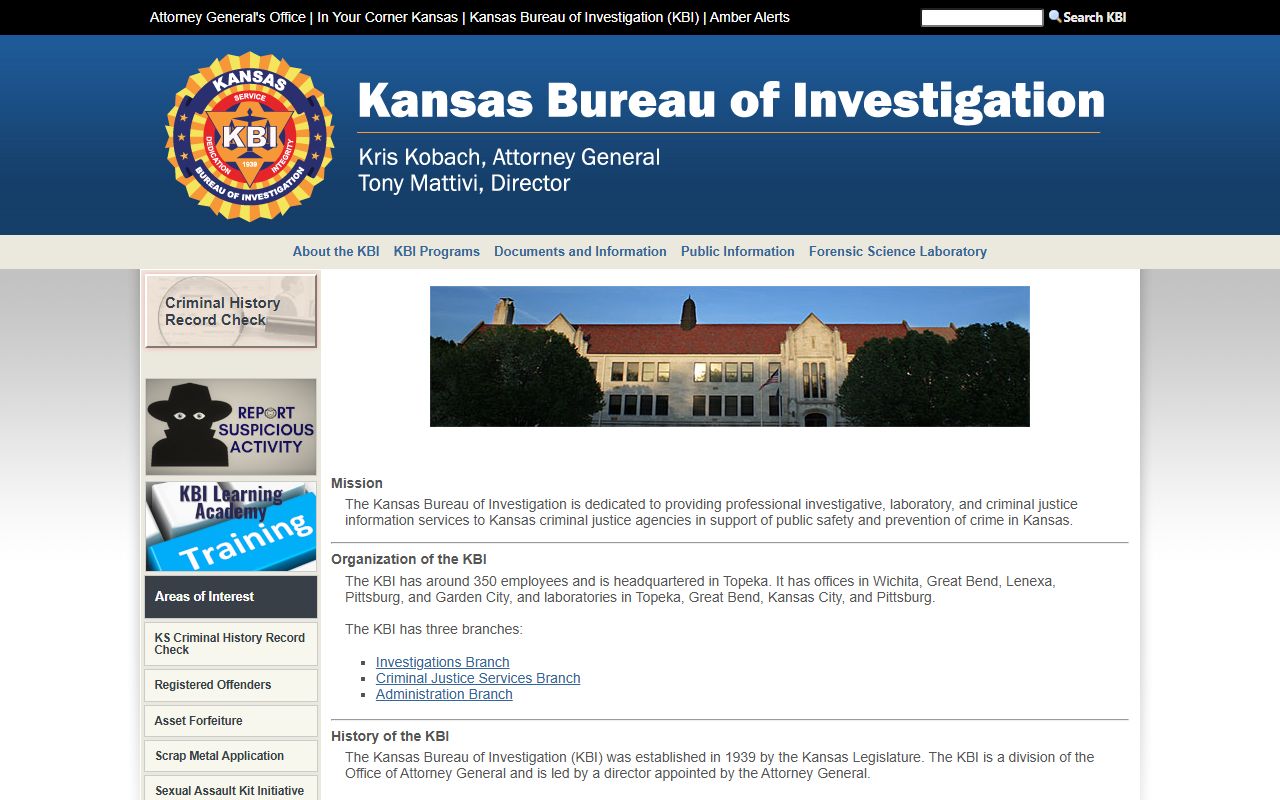
The KBI source can help with state criminal justice context, but it does not replace a Barton County District Court criminal case docket.
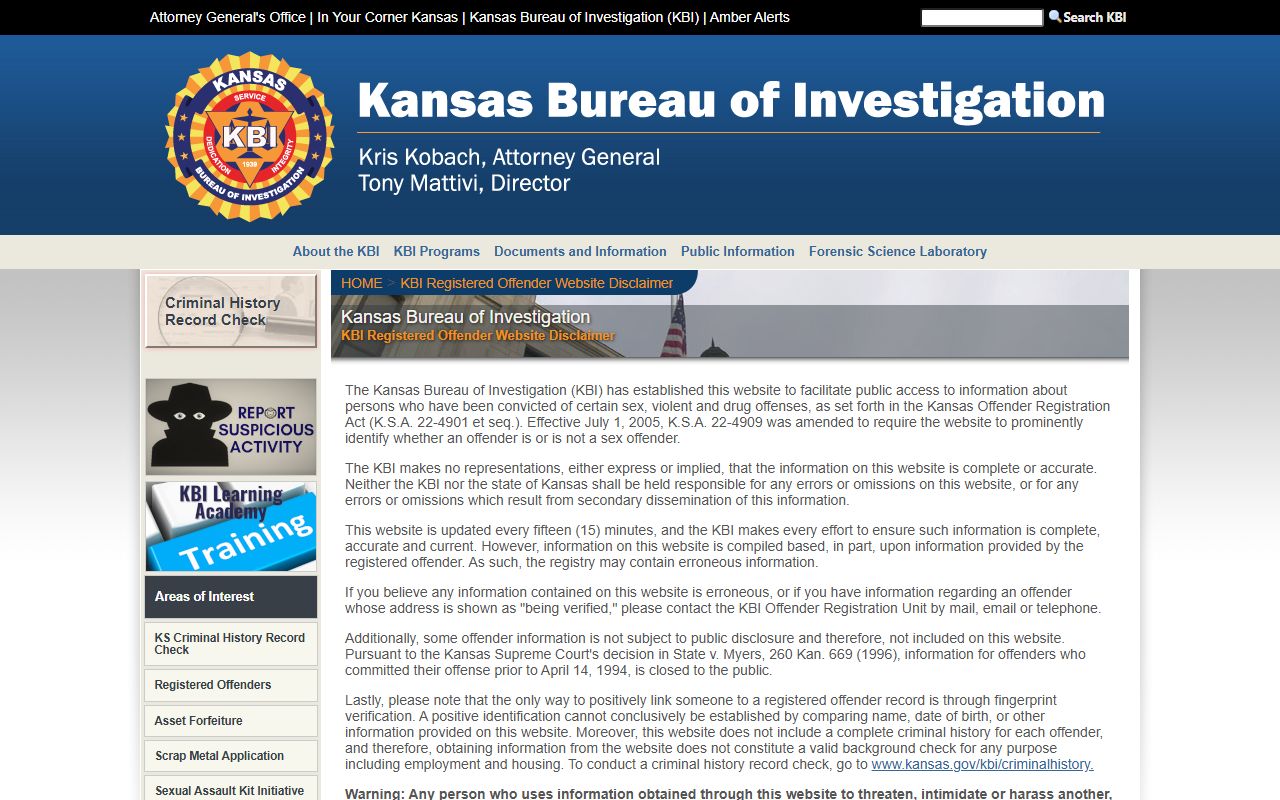
Registered offender data should be read as a separate registry record, not as proof of every charge in a court case file.
Charges vs Convictions
A charge is an accusation filed in court. A conviction is an outcome after a guilty plea, no-contest plea treated as a conviction, or verdict. Barton County criminal court records may show charges that are amended, reduced, dismissed, or resolved differently by count. Do not treat every listed charge as a conviction unless the disposition supports that reading.
| Point | Charge | Conviction |
|---|---|---|
| Stage | Filed accusation in the court case. | Final result after plea or verdict. |
| Record Use | Shows what was alleged or amended. | Shows the adjudicated outcome. |
| Case Result | May be dismissed, reduced, or changed. | Can support sentencing, costs, probation, or other terms. |
Read Dispositions and Sentences
Disposition is the final outcome of a charge or case. A sentence is the punishment or condition ordered after conviction. Barton County criminal court records may include jail terms, probation, fines, court costs, restitution, payment schedules, bond entries, and balance information. Local court rules identify Barton County criminal motion days on the second and fourth Friday of each month, which can explain recurring hearing settings in the docket.
Kansas Department of Corrections sources may help after sentencing, but they do not replace the Barton County criminal case file. KDOC KASPER is updated each working day and is not a complete criminal history. KDOC also explains locating a resident through its locating FAQ.
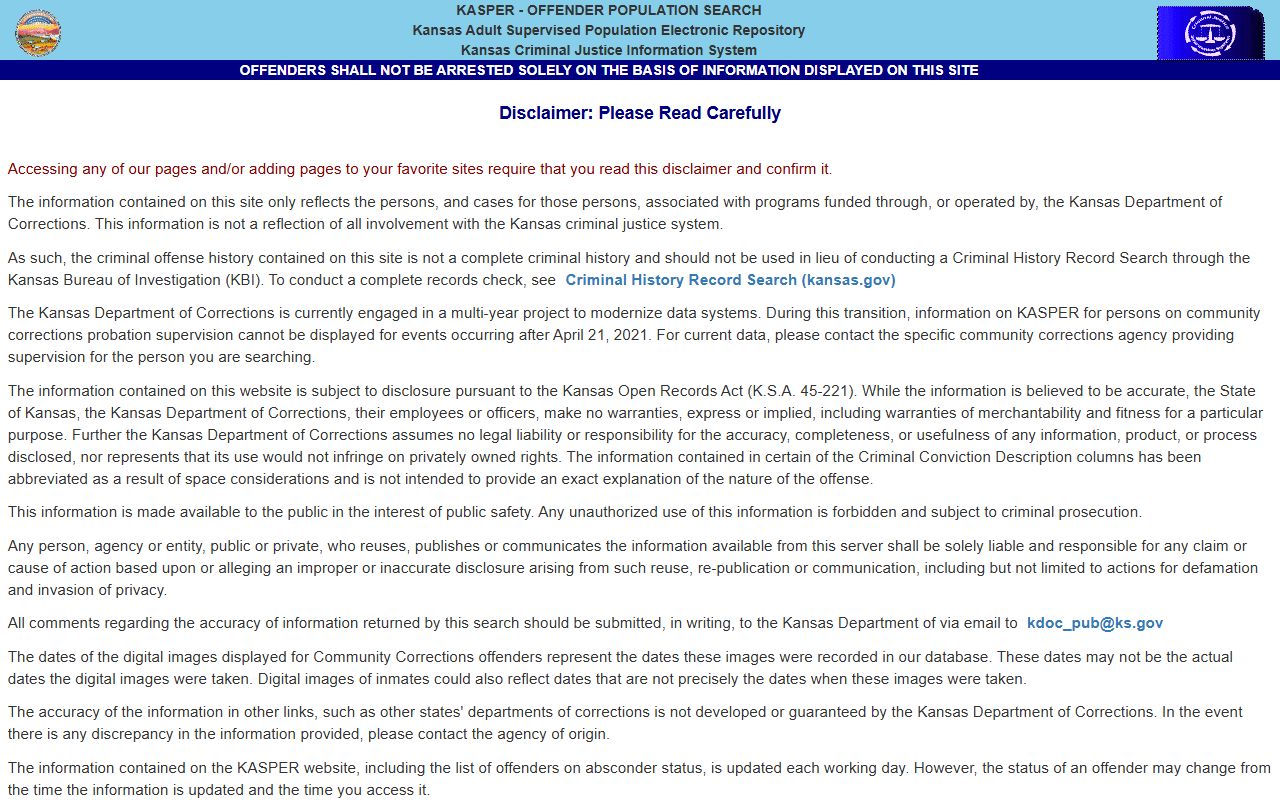
KASPER is useful for Kansas Department of Corrections custody or supervision information, not for every Barton County criminal case event.

The KDOC locating source applies after a person is in a KDOC-funded or operated program, while pretrial and local jail questions use county channels.
Sealed vs Expunged Records
Kansas law allows some criminal records to be sealed or expunged by petition when the legal requirements are met. A sealed record is hidden from public access by court order or law. An expunged record is limited from ordinary public view under the expungement order, though specified agencies or uses may still be allowed by statute. Juvenile matters have their own rules and are not treated like adult criminal files.
| Point | Sealed | Expunged |
|---|---|---|
| Public View | Hidden or restricted from ordinary public access. | Removed or limited from ordinary public search after a valid order. |
| Legal Basis | Court order or confidentiality rule. | Petition-based relief under Kansas expungement statutes. |
| Possible Access | May require party status, court order, or statutory authority. | Some agencies or licensing uses may still be allowed by law. |
The assigned image below shows K.S.A. 21-6614, the Kansas statute covering expungement of many convictions, related arrest records, and diversion agreements.
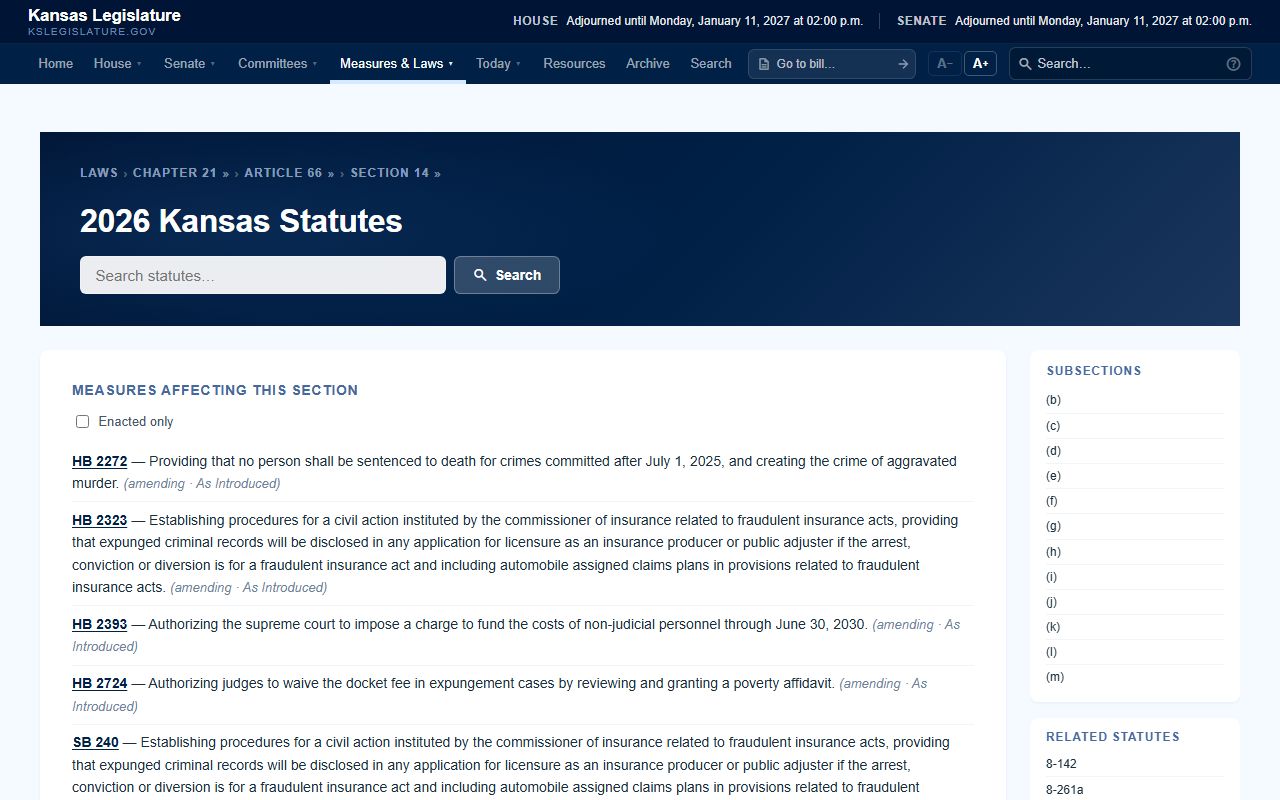
Expungement questions should be checked with the Barton County District Court clerk or Kansas court self-help materials because eligibility depends on the case and statute.
Access to Criminal Court Records
Kansas public access starts from the rule that public records are open unless the law provides otherwise, but criminal court records still have limits. K.S.A. 45-216 states the broad Kansas open-records policy, and K.S.A. 45-221 lists records not required to be disclosed. Barton County's own KORA material also lists criminal investigation records and personal-nature information among examples that may be restricted.
For a filed criminal case, start with the court custodian rather than the county administrative KORA portal. The Clerk of the District Court handles district court case files, while Barton County NextRequest is aimed at county administrative records. Sheriff Records Division handles releasable accident, criminal incident, and miscellaneous incident reports. Those records can be important background, but the filed criminal court record is still the source for pleas, docket orders, disposition, sentence, fines, costs, and restitution.
Note: A criminal court record can be public while related investigation reports, juvenile details, or protected identifiers remain withheld.